
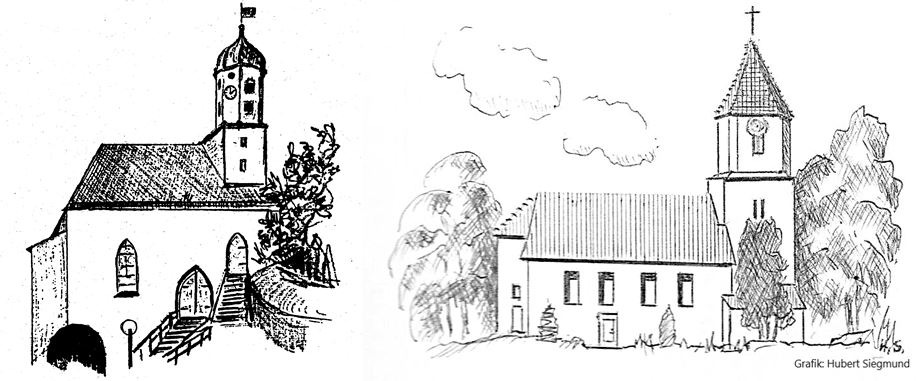



Because the path up to the castle church was especially long and difficult in winter, the Chapel of St. Barbara was built at the foot of the castle hill in 1426 under Count Friedrich III of Oettingen and his son Wilhelm I. The chapel was used only for early masses and, after the Reformation, for additional church services, while the castle church remained the official parish church.
Soon, however, the chapel became too small for the congregation. It is reported that the pastor could preach there only “in the sweat of his brow” and could barely stand on the pulpit. During the summer heat, worshippers fainted, and because of overcrowding many had to remain outside the doors in all kinds of weather. Therefore, the nearly 200-year-old chapel was demolished, and in 1609 Count Gottfried of Oettingen-Oettingen commissioned the construction of today’s St. Barbara Church.
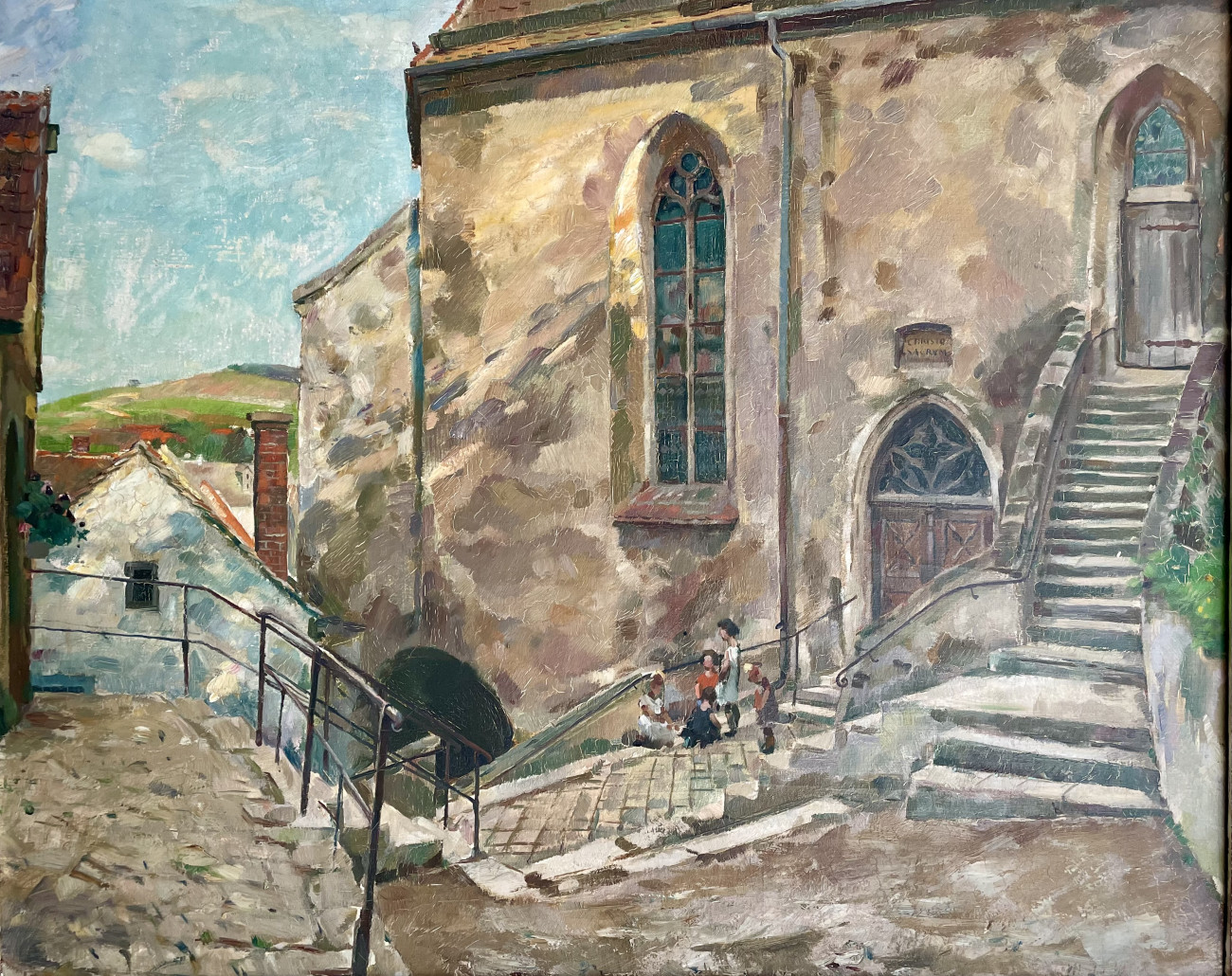
Because of the limited space available, it was impossible to build a long nave. The architect therefore shortened the building so much that it became almost square in shape. To the east, a three-sided chancel was attached, beneath which the alley called “Am Bogen” passes through a tunnel.
The foundation stone was laid on April 3, 1612, and by November 28, 1613 — the first Sunday of Advent — services were already being held in the new church, which from then on became the Protestant parish church of Harburg.
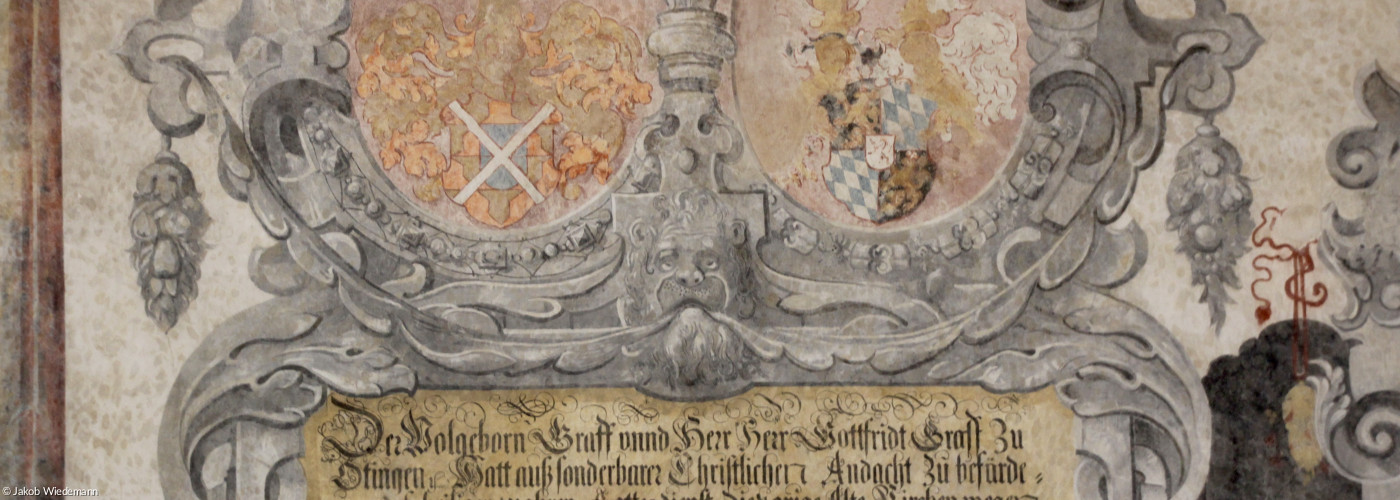
A large fresco on the right wall of the church commemorates the time of its construction. Above the inscription are the coat of arms of Count Gottfried of Oettingen-Oettingen on the left and, beside it, the coat of arms of his second wife, Barbara of Palatinate-Zweibrücken-Neuburg, Countess Palatine of the Rhine and Duchess of Bavaria.
The inscription reads:
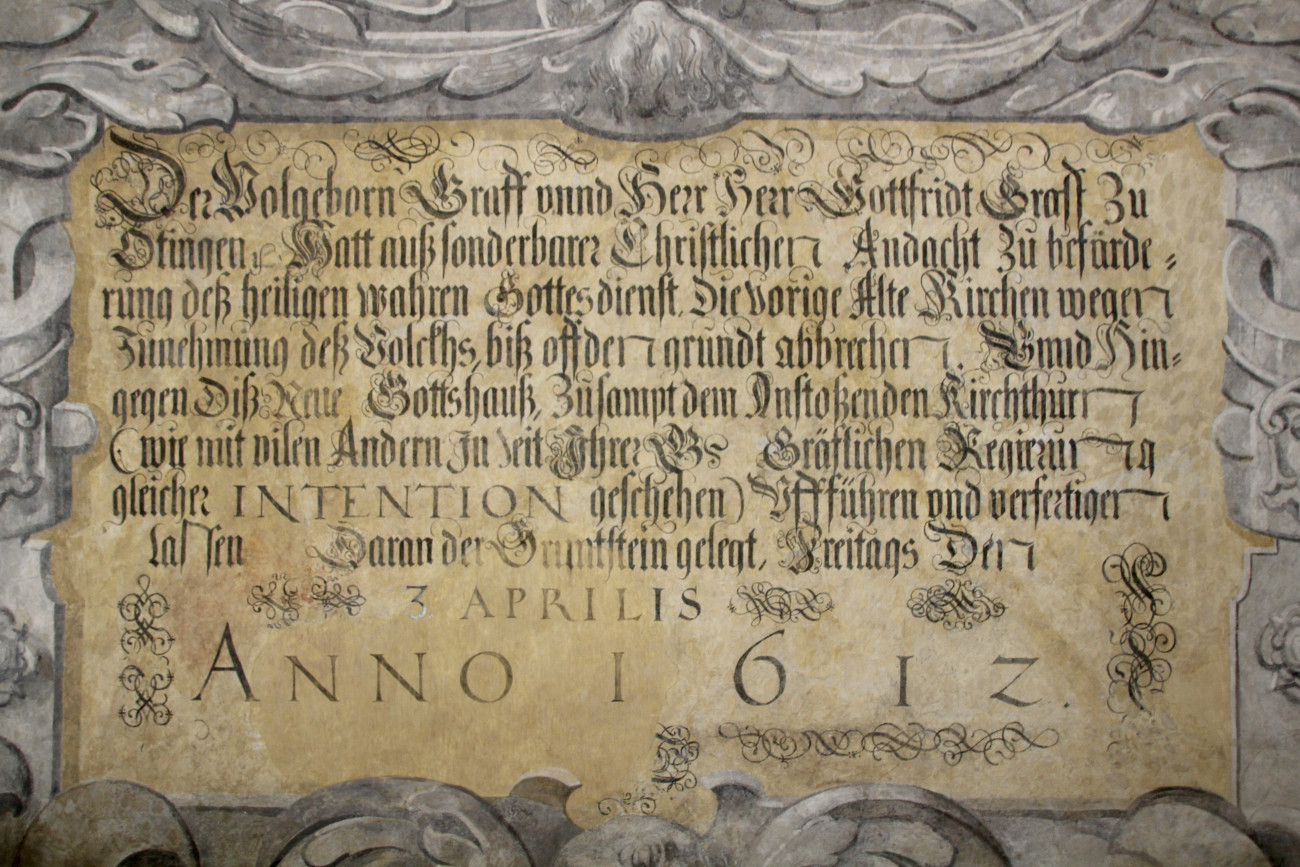
The noble Count and Lord, Lord Gottfried, Count of Oettingen, out of special Christian devotion and for the promotion of the true holy worship of God, had the former old church demolished down to its foundations because of the increasing population, and in its place caused this new house of God, together with the adjoining church tower, to be erected and completed — as he likewise did with many other buildings during his rule and with the same intention. The cornerstone was laid on Friday, the 3rd day of April, 1612.
The church walls were also richly painted in 1612. The windows were framed with gray-black architectural paintings, as can still be seen today in the uncovered section of the fresco. The window surrounds featured marble effects, ornamental scrollwork, metalwork motifs, and in some places grotesque decorative elements.
⬅ Overview page